
Spot price
Spot is the market price for one troy ounce of pure gold, bought for immediate delivery. It moves through the trading day, and you can find it in the financial news or on any metals price site.
A troy ounce is the unit precious metals are weighed in. It is about 31.1 grams, heavier than the ordinary ounce of about 28.3 grams on a kitchen scale. Some buyers weigh in pennyweights (dwt): there are 20 in a troy ounce.
Spot is a wholesale price for pure gold. No buyer pays the full spot price for a coin or a bar: a dealer buys for less than spot and sells for more, and the difference covers testing, holding, reselling and profit.
Fineness and fine weight
Most gold isn’t pure. Fineness is the share of a piece that is gold, written in thousandths (.900, .9167, .9999) or as a percentage. The fine weight is the gold alone: the total weight times the fineness.
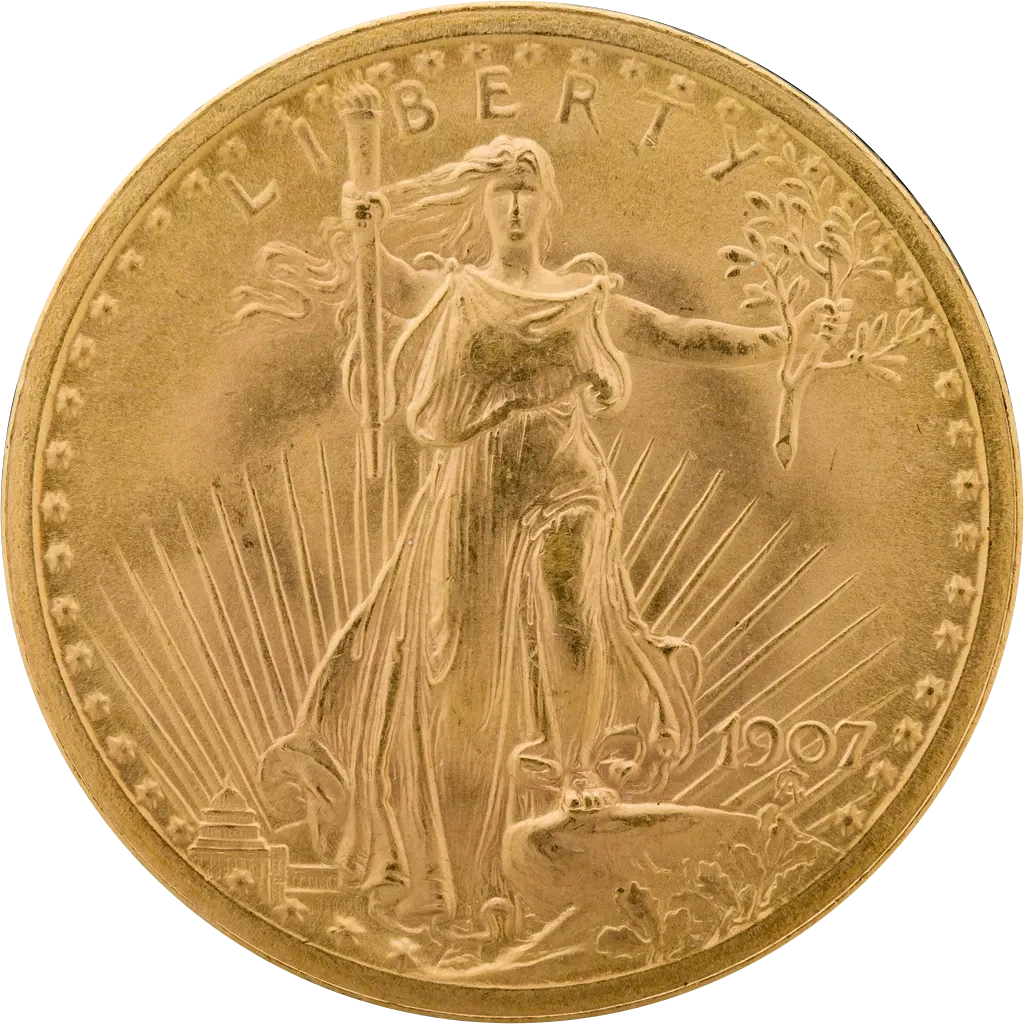
- A $20 Saint-Gaudens or Liberty Head gold piece weighs 1.075 troy ounces and is .900 fine, so it holds 0.9675 troy ounces of gold.
- A one-ounce American Gold Eagle is 91.67% gold. The whole coin weighs about 1.09 troy ounces and holds exactly one troy ounce of gold.
- A one-ounce American Buffalo or Canadian Maple Leaf is .9999 fine, so the coin weighs one troy ounce and nearly all of it is gold.
That is why weighing alone isn’t enough. Two pieces of the same weight can hold different amounts of gold, so a buyer has to test the fineness as well as weigh.
The arithmetic, with an example
Here is the arithmetic with a made-up round number, so it is easy to follow. Say gold were two thousand dollars a troy ounce. That figure is an example only, not today’s price.
Find the fine weight
A twenty-dollar Saint-Gaudens holds 0.9675 troy ounces of gold.
Multiply by the gold price
At two thousand dollars an ounce, 0.9675 ounces comes to one thousand nine hundred thirty-five dollars. That is the value of the gold in the coin, often called its melt value.
Compare offers in dollars
A buyer’s offer for that coin will be less than that figure. The gap, in dollars, is what you’re comparing from one buyer to the next.
The same arithmetic shows why fine weight matters. A one-ounce Gold Eagle weighs about 1.09 ounces, but it holds one ounce of gold. At the same example price its gold comes to two thousand dollars, not the larger figure its whole weight would suggest.
Some older gold coins are worth more to a collector than their gold content, because of their date, mintmark or condition. For those, ask whether the buyer looked at the coin as a coin, not only as gold.
Why a percentage of spot can mislead
Many buyers advertise a percentage of spot instead of a price. It sounds exact, but it leaves out most of what decides the amount you get. Before a percentage means anything, you need answers to these questions.
- Of what weight? A percentage of a coin’s whole weight and a percentage of its fine weight are different amounts of money.
- In which unit? A price per gram, per pennyweight and per troy ounce are three different numbers for the same gold.
- After which deductions? Testing, refining or handling charges can come off after the percentage is applied.
- Which spot price? Spot moves through the day. Ask which price the percentage is taken from, and when.
- Does “up to” cover your piece? An advertised top figure may apply only to certain items or to large amounts, not to what you brought.
None of this makes a percentage dishonest. It means you can’t check it until it becomes a dollar figure, so ask for that.
Why dollars per item can be checked
A dollar figure for each piece is the amount you actually receive. You can add the figures up, compare them with another buyer’s for the same pieces, and see what each piece brings. Nothing depends on which weight, unit or spot price was used.
Ask for the figures in writing, piece by piece, with each one’s weight and fineness. If a buyer gives one figure for the whole lot, ask how it breaks down.
We quote the same way. Our prices are listed item by item, in dollars, on our What we pay page, so you can compare before you drive. At the counter we weigh and test every piece in front of you and give you an itemized offer you can take or leave.
Today’s prices for gold coins
| Item | We pay |
|---|---|
| 1 oz gold bullion coins 91.67% gold · 32.7 mm · 1 oz of fine gold each | $3,491 per coin |
| 1/2 oz gold bullion coins 91.67% gold · 27 mm · 0.5 oz of fine gold each | $1,745 per coin |
| $20 gold coins (Liberty Head and Saint-Gaudens) .900 fine · 34 mm · 0.9675 oz of fine gold each | $3,377 per coin |
| $10 gold coins (Liberty Head and Indian Head) .900 fine · 27 mm · 0.4838 oz of fine gold each | $1,689 per coin |
Walk in to our Garden Grove store with a valid government photo ID; no appointment needed, and you must be 18 or older. Or get a quote from photos first.
Questions
What is the spot price of gold?
The market price for one troy ounce of pure gold, bought for immediate delivery. It is quoted in dollars per troy ounce and moves through the trading day.
Why doesn’t a buyer pay the full spot price?
Spot is a wholesale price for pure gold. A buyer has to test, hold and resell what it buys, so a dealer buys for less than spot and sells for more. Ask how much less, in dollars, for each piece.
What percentage of spot do you pay?
We show our prices in dollars, item by item, on our What we pay page, not as a percentage. At the counter you get an itemized offer you can take or leave.
How do I check a buyer’s scale?
Watch it. It should read zero before your piece goes on, and you should see the number. Ask which unit it shows: a troy ounce is 20 pennyweights, or about 31.1 grams.